

From Gray to Warm: How to Transition Your Home Without Repainting Everything
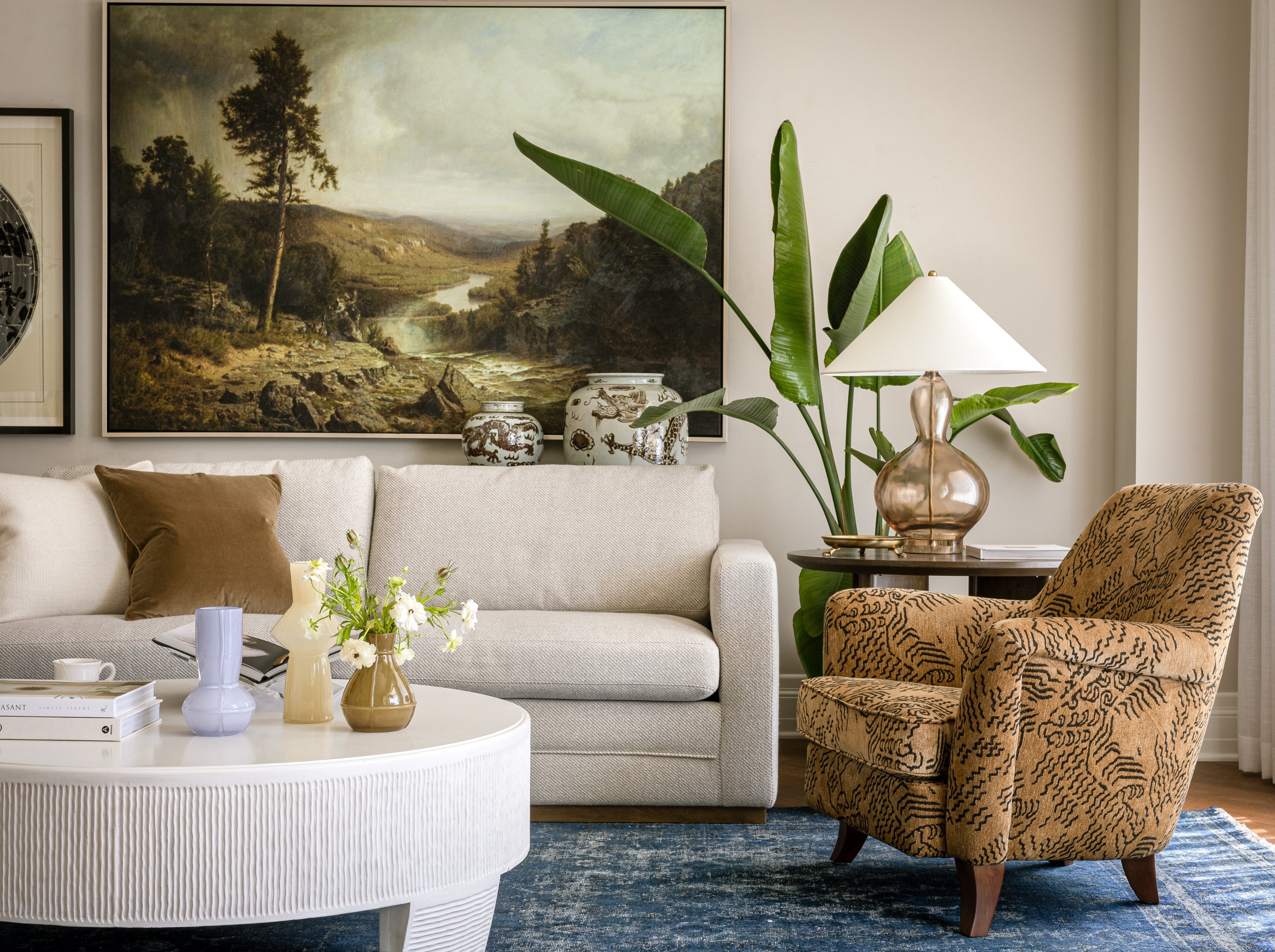
Gray has been the popular wall color choice for over a decade. Gray is everywhere, from renovation shows to new builds to the pages of design magazines. It felt safe, sophisticated, and timeless. Then, we looked at our homes and realized the rooms feel cold.
If you painted the walls gray, bought the gray sofa, chose the gray rug, and finished it all with cool metals, you're not alone, and your home isn't dated beyond repair. The homes where gray works beautifully tend to have something else happening around it: warm wood, natural textiles, layered lighting, collected objects, and plenty of organic texture. If you're wondering how to warm up a gray home, start with what's already in the room, thoughtful changes can completely change the feeling of a space.
Here are six places we'd start.
1. Start With the Rug


If you only make one change, make it the rug. A cool gray or blue rug against gray walls and floors can amplify everything you're trying to get away from. A rug is the largest art piece in a room, changing it can shift the entire room almost instantly. Our favorite warm tones are fawn, camel, warm ivory, terracotta, cider, or natural wool.
The Farah Rug in Fawn is a beautiful example of a warm neutral that doesn't feel overly beige. For something with visual texture, the Sussex Rug brings warmth with its dimensional pattern and brown tones.
If your space needs more character, the Ines Tabriz Rug adds traditional warmth and a vintage quality. And when you're ready for more color, the Jasper Rug in Cider brings rich amber tones to truly ground a space.
2. Bring in Natural Wood


Wood is one of the easiest ways to ground a gray room. Unlike a flat color, natural wood brings warmth, variation, and organic texture. In an entry, a substantial piece like the Constance Centerhall Table creates an immediate shift. In a dining room, the James Dining Table in Bleached Walnut can become the warm anchor the entire room has been missing. You can also start smaller with a wood frame, side table, stool, or serving board. The goal isn't to fill the room with wood, it's to introduce enough natural material that the gray no longer feels like the dominant story.
3. Warm Up Your Upholstery


Sofas and chairs in gray upholstery are large, highly visible, and often the most expensive pieces in a room. However, that doesn't mean it needs replaced. A camel throw or a few pillows in oatmeal, terracotta, or fawn can soften a gray sofa without committing to a new one.
If you're ready for a larger change, the Jacob Sofa in Oatmeal Linen shows how warm upholstery can still feel tailored and sophisticated. For something richer, the Colette Curved Sofa in Camel Velvet brings warmth through both color and texture.
4. Trade Cool Metals for Warm Finishes


Chrome, brushed nickel, and steel finishes can quietly reinforce a cool palette. You don't need to replace every piece of hardware in your home. Instead, choose a few visible accents and introduce something warmer. Try an aged brass lamp, a warm ceramic vessel, or a terracotta planter.
The Penny Lamp in Brass brings warmth through its chic, sculptural form. For an even simpler shift, a piece like the Guardian Garden Stool introduces a timeless blue and white tone without requiring a major change.
This is one of our favorite ways to make a room feel more layered, you don't have to remove everything cool, just add balance.
5. Warm the Light


This is the easiest change, and one of the most overlooked. Cool LED bulbs can make an entire room feel cold, regardless of how many warm accessories you've added. For a softer, more inviting atmosphere, choose warm white bulbs around 2700K–3000K. Then, add light at different levels throughout the room. A table lamp on a console, a floor lamp beside a chair, or a pair of lamps on a nightstand creates pools of warm light that make the room feel more intimate. The Frances Crystal Table Lamp brings a luminous quality to a bedside table or console, while the Guardian Angle Lamp can warm up a entry console, kitchen table, or bookshelf.
You don't have to wait for a new renovation to change the atmosphere of a room. Sometimes the fastest fix is simply changing the bulb.
6. Add Something Organic


Finally, bring in something alive. Plants, branches, terracotta, natural fibers, and organic ceramics add movement and texture to a room. A Guardian Orchid Pot brings a sculptural botanical moment to an entry or shelf, while a Greenwood Branch adds height and movement to a console or table.
You Don't Have to Repaint Everything
There is nothing wrong with gray. The problem comes when every layer of a room is speaking the same cool language. The answer is to balance it with a warm rug, wood, brass tones, natural textiles, and something organic.
Suddenly, the gray walls aren't the problem anymore, they're simply one layer in a room that feels warmer, richer, and more like you.
If you do decide you want to repaint, paint can look dramatically different depending on natural light, surrounding furnishings, and time of day. Our Tips & Tricks | Wall Paint is a good place to start.
Ready to make your home feel more like you? Book a Home Furnishing Design consultation with Alice Lane and let our designers help you create a space that feels warm, layered, and beautifully considered.
Comments