

The Rug Sizing Guide: Why Most People Go Too Small and How to Fix it
If there is one piece of design advice we find ourselves giving again and again, it’s this: your rug is too small. When we walk into a client’s home, this is one of the most common things we notice. Not the wrong color. Not the wrong pattern. The rug is simply too small.
A rug that floats in the middle of a room, with all the furniture sitting around it, creates what we like to call the magic-carpet effect. Instead of grounding the space, it creates a visual island and can actually make the room feel smaller. A rug should do the opposite. It should anchor the room, connect the furniture, and make the entire space feel intentional. The fix is usually simple: go up a size.
But how do you know which size is right? We’re breaking it down room by room, with the exact measurements you can take home and put straight to the tape measure.
The Living Room


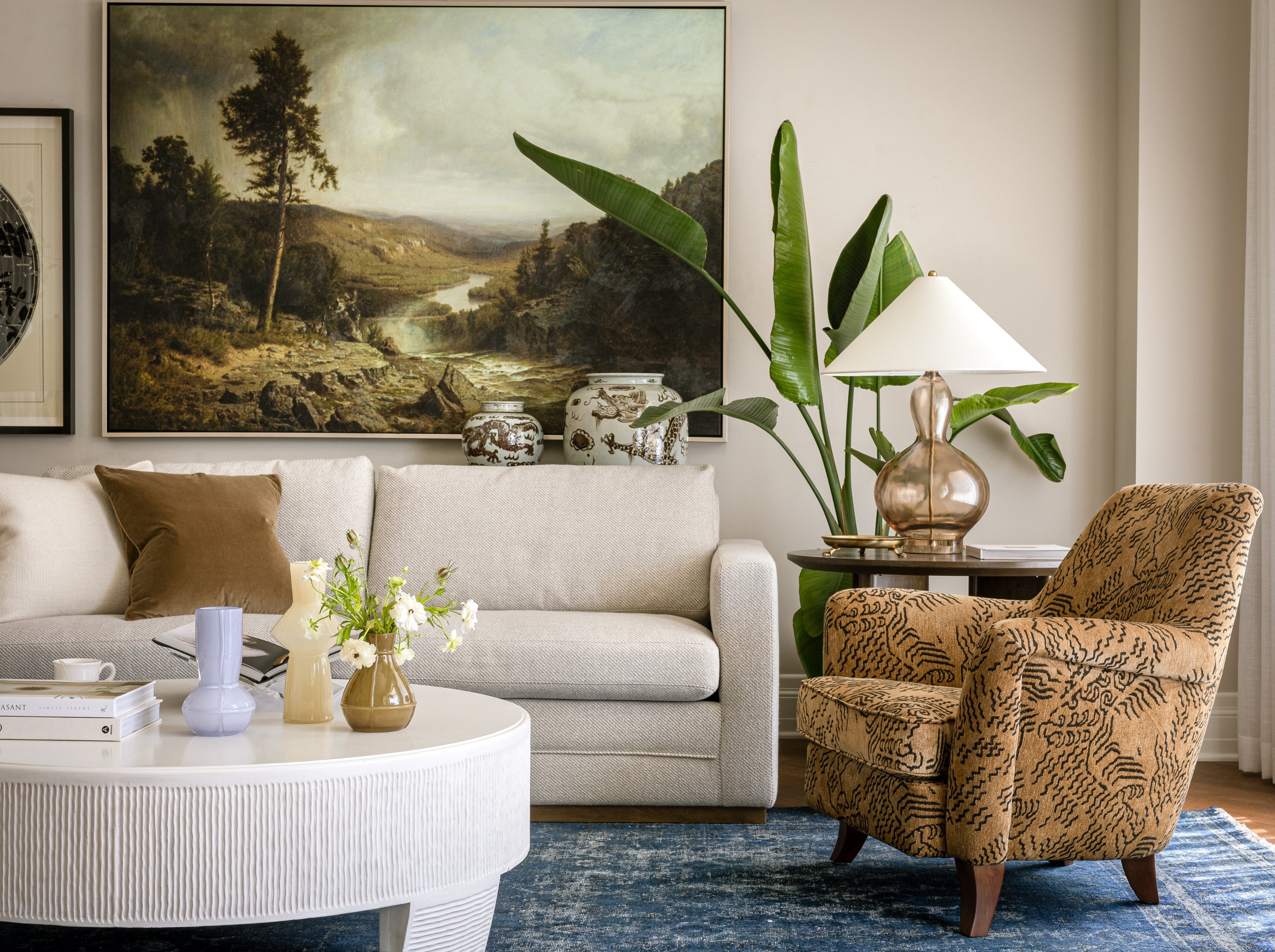
The living room is where rug sizing matters most because the rug needs to bring the entire seating arrangement together. At a minimum, all of the front legs of your sofas and chairs should sit on the rug. Ideally, all four legs of every piece of furniture are on it. This creates a connected seating area rather than a collection of furniture floating around the room.
As a general guide:
8x10: Works well for smaller living rooms with a sofa and two chairs in a close arrangement.
9x12: The most common size we recommend for a standard living room and usually larger than people instinctively choose.
10x14: Best for larger living rooms or open-concept spaces
Here’s an easy test: stand at the edge of your furniture grouping and look down. Your rug should extend at least 18 inches beyond the furniture so the arrangement feels generous and grounded. When in doubt, size up. A larger rug will almost always make a room feel more finished.
Some of our favorites include the Atlas Rug, Sussex Rug, Olympia Key Rug, and the Leo Dusk Rug.
The Dining Room


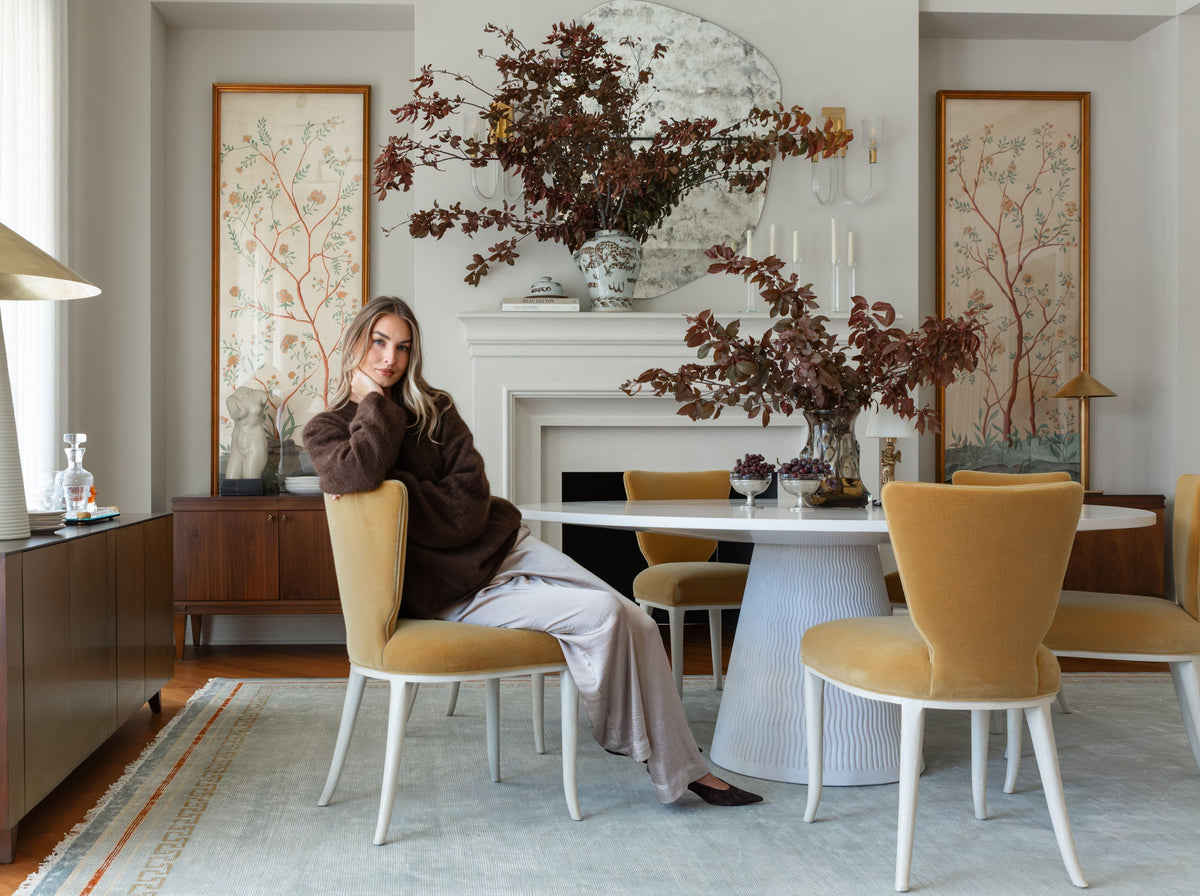
The dining room has one rule we consider non-negotiable: the chairs need to stay on the rug when they're pulled out from the table. This is where it is easy to make the mistake of choosing a rug based only on the footprint of the table. But, dining chairs need room to move. If the back legs fall off the rug every time someone sits down, the rug is too small. Plan for the rug to extend at least 24 inches beyond every side of the table.
For an eight-person table measuring approximately 38"x96", a 9x12 rug is the minimum we would recommend. For a ten-person table, move up to a 10x14.
It may feel generous when you first lay it out, but once the chairs are pulled back, you’ll be glad you did.
For a dining room, we love the classic Ines Tabriz Rug, the generous ground of the Sussex Rug, or the Greek Key Atlas Rug.
The Bedroom


There are a few different ways to bring a rug into the bedroom, depending on the layout and the feeling you want.
1. A full rug under the bed
This is our favorite approach when the room allows for it. The rug should extend at least 18" beyond both sides and the foot of the bed. For a king bed, that typically means a 9x12 minimum, with a 10x14 often creating an even more luxurious look. Think of the rug as another layer of the bed rather than something that simply sits underneath it.
2. Two bedside runners
If the bed is against a wall or a full-size rug doesn't work with your layout, try a runner on either side of the bed. Each runner should be sized to the nightstand footprint and be at least 24" long. The Ines Tabriz Runner is a beautiful choice for this approach, adding pattern and softness without overwhelming the room.
3. A rug at the foot of the bed
Another simple option is placing a rug at the foot of the bed, extending into the open area of the room. A 5x8 or 6x9 works beautifully here.
For bedrooms, we love the warm natural wool of the Farah Rug Fawn, the lighter Olympia Key in Tobacco or the Ines Tabriz Rug.
The Entry


Entries are a little different. In most cases, we prefer a runner rather than an area rug. The goal is to make the runner feel like it belongs to the architecture of the space. It should span the usable length of the entry corridor and be wide enough that guests naturally step onto it as they walk through.
For a standard hallway, aim for a minimum of 2.5 feet wide. If you have a generous entry, go up to 3 feet.
The Ines Tabriz Runner or Kent Rug are our favorites for an entry because its pattern and durability can hold its own against tile, stone, or hardwood.
The Rug Sizing Cheat Sheet
When you're standing in the middle of your room with a tape measure in hand, keep these numbers close:
Living Room: All front legs on the rug; ideally all legs. A 9x12 is the minimum for most standard rooms.
Dining Room: Allow 24" beyond every edge of the table so chairs remain on the rug when pulled out. A 9x12 is the absolute minimum for an eight-person table.
Bedroom: Allow 18" beyond both sides and the foot of the bed. A 9x12 is the minimum for a king.
Entry: Run the rug along the full usable corridor length. Aim for at least 2.5 feet wide.
And our favorite rule of all? Whatever size feels right, go up one size.
We’re always saying go big at Alice Lane, and rugs are one of the places where that advice makes the biggest difference. A rug isn't just something soft under your feet. It is the foundation of the room. It defines the seating area, connects your furniture, adds texture and pattern, and gives everything else somewhere to land.
So before you order that 8x10 because it feels like the safe choice, pull out the tape measure. Give your furniture some breathing room. Go bigger. Your room will thank you.
Want our help in selecting the perfect rug? Contact our free Home Furnishing Design team for a consultation today.
Comments